Scrap Baling Press Machine
Find robust scrap baling press machines in Ahmedabad. Vintech Hydraulics offers reliable, high-performance baling solutions for efficient waste management.
What is a Scrap Baling Press Machine? — Overview
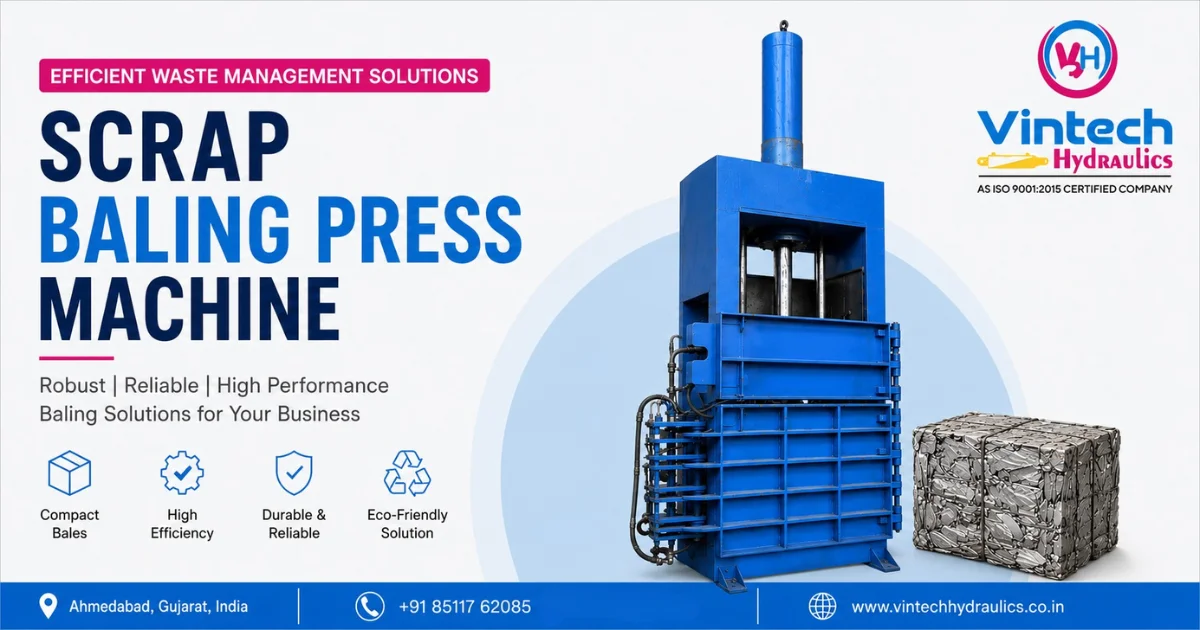
A scrap baling press machine is a piece of industrial equipment designed to compress various types of waste materials into dense, compact bales. These machines utilize hydraulic power to exert immense pressure, reducing the volume of materials like scrap metal, plastic, paper, cardboard, textiles, and more. The resulting bales are uniform in size and density, making them ideal for efficient storage, transportation, and sale to recycling facilities. They are essential for businesses looking to streamline waste handling processes and improve their environmental footprint.
Key Features and Technical Specifications
When evaluating scrap baling press machines, several technical aspects are crucial for ensuring optimal performance and suitability for your operations:
- Bale Size and Density: Varies by model, determining storage capacity and transport efficiency.
- Pressing Force (Tonnage): The amount of force applied, dictating the types of materials it can effectively compress.
- Cycle Time: The duration it takes to complete one baling cycle, impacting overall throughput.
- Motor Power (HP/kW): Indicates the machine's operational strength and energy consumption.
- Chamber Size: The dimensions of the loading area, influencing the size of material that can be fed.
- Hydraulic System: Type and capacity of the hydraulic pump and cylinders, crucial for reliability and power.
- Material Feed Type: Options include manual loading, conveyor belts, or automatic feeding systems.
- Safety Features: Emergency stops, interlocks, and guarding to ensure operator safety.
Industrial Applications and Use Cases
Scrap baling press machines are versatile and find applications across a wide spectrum of industries in Ahmedabad and beyond:
- Metal Fabrication: Compressing scrap metal pieces, turnings, and shavings into manageable bales for recycling.
- Textile Industry: Baling fabric scraps, yarn waste, and production offcuts to reduce volume and facilitate disposal or recycling.
- Recycling Centers: Processing mixed recyclables like cardboard, plastic, and paper to create dense bales for efficient handling.
- Warehousing and Logistics: Compressing packaging materials such as cardboard and plastic film to optimize space and reduce disposal costs.
- Automotive Industry: Baling scrap metal parts, tires, and other waste generated during vehicle manufacturing or repair.
- Paper Mills and Printing Presses: Compressing waste paper and cardboard for efficient storage and transport.
- Plastic Manufacturing: Baling plastic scrap and offcuts from production processes.
- General Manufacturing: Managing a variety of waste streams from diverse production lines.
How to Choose the Right Scrap Baling Press Machine
Selecting the appropriate baling press requires careful consideration of your specific operational needs. Here’s a checklist to guide your decision:
- Material Type and Volume: Identify the primary materials you need to bale and the average daily or weekly volume. This dictates the required pressing force and chamber size.
- Bale Requirements: Determine the desired bale size and density for storage and transportation logistics.
- Throughput Needs: Assess how quickly you need to process waste to match your production output.
- Space Availability: Measure the installation area, considering access for loading and bale removal.
- Power Source: Ensure compatibility with your facility's electrical supply.
- Automation Level: Decide between manual loading for smaller operations or automated systems for high-volume needs.
- Supplier Reputation and Support: Research manufacturers and suppliers for reliability, warranty, and after-sales service.
- Budget Considerations: Balance upfront cost with long-term operational efficiency and maintenance.
Quality Standards and Compliance
For industrial machinery like scrap baling press machines, adherence to quality standards and compliance with safety regulations is non-negotiable. Reputable manufacturers ensure their equipment meets relevant industry benchmarks. Look for machines that comply with safety directives, often indicated by CE marking in international markets, or adherence to Indian Standards (IS) where applicable. Robust construction, reliable hydraulic components, and well-integrated safety mechanisms are hallmarks of quality. Verifying the supplier's commitment to quality control processes, material sourcing, and testing procedures provides assurance of a durable and safe machine.
Why Vintech Hydraulics' Experience and Capability Matters
Established in 2017, Vintech Hydraulics has steadily built a reputation for delivering reliable hydraulic solutions to industries across Gujarat, including Ahmedabad. Our focus is on understanding the unique waste management challenges faced by businesses and providing machinery that addresses these needs effectively. We leverage our manufacturing expertise to produce scrap baling press machines that are not only powerful and efficient but also built for longevity. Our team comprises experienced engineers and technicians who ensure precision in design and assembly, coupled with rigorous quality checks at every stage.
At Vintech Hydraulics, we pride ourselves on our ability to offer tailored solutions. We work closely with clients to understand their specific material types, volume requirements, and site constraints. This collaborative approach allows us to recommend or even customize baling press machines that offer the best fit for their operations. Our commitment extends beyond the sale, with dedicated after-sales support and service to ensure your equipment performs optimally throughout its lifespan. This deep understanding of hydraulic systems and industrial applications makes us a trusted partner for your waste compression needs.
Installation, Maintenance, and Care Tips
Proper installation and regular maintenance are key to maximizing the lifespan and performance of your scrap baling press machine.
- Installation: Ensure the machine is installed on a level, stable surface capable of supporting its weight and operational vibrations. Connect it to an appropriate power source and ensure all safety guards are securely in place.
- Daily Checks: Before operation, inspect for any loose parts, leaks in hydraulic lines, or obstructions in the loading chamber.
- Lubrication: Regularly lubricate moving parts, such as hinges and guides, as per the manufacturer's recommendations to prevent wear and ensure smooth operation.
- Hydraulic Fluid: Monitor hydraulic fluid levels and quality. Contaminated or low fluid can damage the pump and cylinders. Schedule regular fluid changes.
- Filter Maintenance: Hydraulic system filters should be cleaned or replaced periodically to prevent contamination.
- Bale Ejection: Ensure bales are ejected smoothly. If there's resistance, investigate potential issues with the chamber or bale density.
- Operator Training: Ensure all operators are fully trained on the machine's functions, safety procedures, and basic maintenance tasks.
- Professional Servicing: Schedule periodic professional inspections and servicing to catch potential issues before they become major problems.
Frequently Asked Questions
Scrap baling press machines are designed to handle a wide array of materials, including scrap metal, cardboard, paper, plastic bottles, textiles, aluminum cans, and other recyclable waste. The specific material handling capability depends on the machine's model, pressing force, and chamber design.
A hydraulic baling press uses a hydraulic system, typically comprising a pump, reservoir, and cylinders, to generate immense force. This force is applied to a ram that compresses the material loaded into the chamber, forming it into a dense bale.
With proper maintenance, regular servicing, and quality construction, a scrap baling press machine can have a lifespan of 10 to 20 years or even longer. Factors like operating hours, material type, and the quality of components significantly influence longevity.
The space requirement varies greatly depending on the size and type of baling press. Compact vertical balers might fit in smaller areas, while larger horizontal balers require more significant floor space, including room for loading and bale removal.
Using a baling press significantly reduces waste volume, leading to lower disposal costs and more efficient use of storage space. It also makes waste easier to handle, transport, and can create a revenue stream by selling compressed recyclables to processing facilities.
Routine maintenance includes daily checks for leaks and obstructions, regular lubrication of moving parts, monitoring and changing hydraulic fluid, cleaning or replacing filters, and ensuring safety guards are functional. Periodic professional servicing is also recommended.
Conclusion
For industries in Ahmedabad seeking to optimize waste management, reduce operational costs, and enhance their sustainability efforts, a scrap baling press machine is an invaluable investment. The decision hinges on understanding your specific material streams, volume, and spatial constraints. By focusing on robust construction, appropriate technical specifications, and reliable supplier support, you can secure a machine that delivers consistent performance and long-term value. Vintech Hydraulics is committed to providing high-quality, durable baling solutions backed by industry experience, helping businesses in Ahmedabad and across Gujarat achieve efficient and responsible waste handling.
Get In Touch
Vintech Hydraulics