Benefits of Single Cylinder Baling Press Technology
Discover the advantages of single cylinder baling press technology for efficient waste management and material handling in Ahmedabad. Learn how Vintech Hydrauli
Why This Matters in Ahmedabad
Ahmedabad, a major industrial hub in Gujarat, hosts a diverse range of industries, including a significant textile sector, metal processing units, and numerous manufacturing facilities. This industrial activity inherently generates substantial amounts of waste and scrap materials. The sheer volume of textile waste from garment production, metal scraps from fabrication, and packaging materials from logistics demands effective compression solutions. Companies in Ahmedabad are increasingly prioritizing operational efficiency and cost-effectiveness, making advanced baling technology a critical investment. A well-chosen baling press can directly impact a business's bottom line by reducing waste disposal costs and creating revenue streams from recycled materials.
What is a Single Cylinder Baling Press — Overview
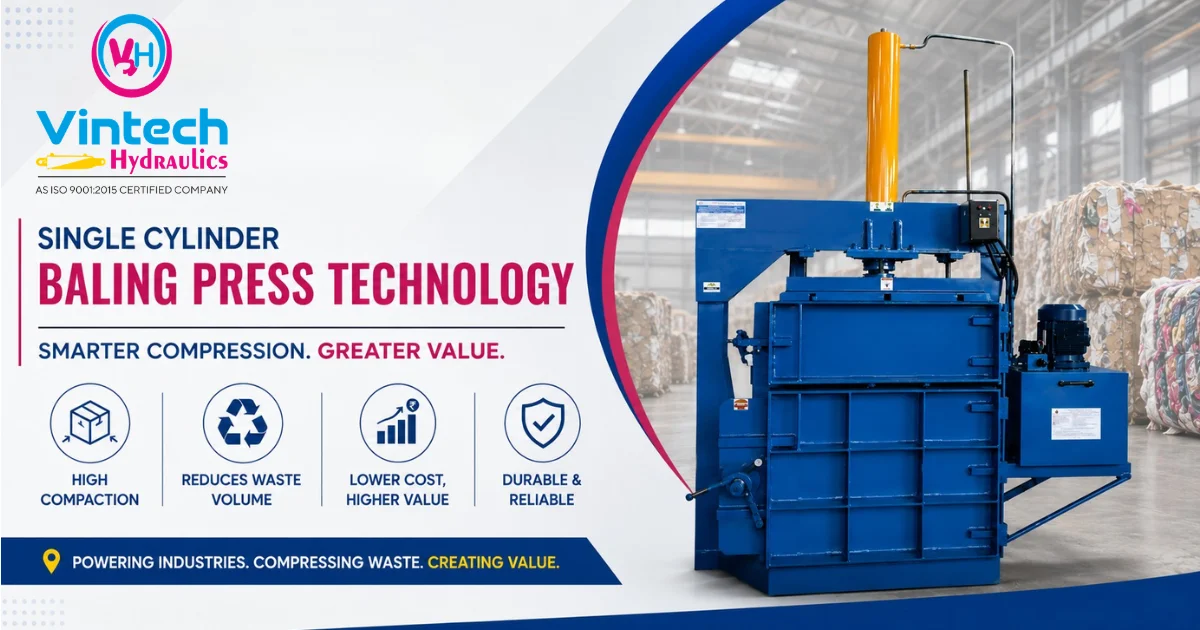
A single cylinder baling press is a hydraulic machine designed to compress loose materials into dense, uniform bales. Its core mechanism involves a single hydraulic cylinder that drives a ram or platen downwards into a chamber, compacting the material. This design is typically simpler and more straightforward compared to multi-cylinder systems. The compressed material is then secured with strapping, forming a compact bale ready for storage or transport. These machines are widely used for materials like textile waste, paper, cardboard, plastic, and light scrap metals, making them versatile tools for various industrial applications.
Key Features and Technical Specifications
- Robust Single Hydraulic Cylinder: Provides consistent and powerful compression force for effective baling.
- Heavy-Duty Steel Construction: Ensures durability and longevity even under demanding industrial use.
- Generous Bale Chamber Size: Accommodates varying volumes of input material, allowing for efficient processing.
- Simple Electrical Control Panel: Features user-friendly operation for ease of use and minimal training requirements.
- Automatic Bale Ejection System: Facilitates quick and safe removal of the finished bale, improving cycle times.
- Adjustable Bale Density Settings: Allows operators to customize the compaction level based on material type and desired bale size.
- Safety Interlocks and Emergency Stops: Integrated safety features to protect operators and prevent accidents.
- Low Power Consumption: Designed for energy efficiency, reducing operational costs.
Industrial Applications and Use Cases
- Textile Waste Compression: Ideal for compressing fabric scraps, yarn waste, and offcuts from garment manufacturing units, reducing volume for disposal or recycling.
- Cardboard and Paper Recycling: Efficiently compacts corrugated boxes, paper waste, and office paper for recycling facilities and large commercial establishments.
- Plastic Scrap Baling: Compresses PET bottles, plastic films, and other plastic waste, making them easier to handle and transport to recycling centers.
- Light Metal Scrap Baling: Suitable for baling aluminum cans, light steel scraps, and other non-ferrous metals, preparing them for smelting.
- Garbage and Municipal Solid Waste (MSW) Reduction: Used in waste management facilities to compress general refuse, reducing landfill volume.
- Warehouse and Logistics Operations: Compresses packaging materials, shrink wrap, and other waste generated in distribution centers.
- Jute and Coir Waste Management: Effectively bales natural fiber waste from industries processing jute, coir, and similar materials.
How to Choose the Right Single Cylinder Baling Press
Selecting the appropriate single cylinder baling press is crucial for maximizing efficiency and return on investment. Consider the following factors:
- Material Type and Volume: Identify the primary materials you will be baling and the average volume generated daily or weekly. This dictates the required chamber size and compression force.
- Bale Size and Weight Requirements: Determine the desired bale dimensions and weight for ease of handling, storage, and transportation, as well as for potential buyers of the baled material.
- Compression Force: Ensure the press offers sufficient tonnage to achieve the desired density for your specific materials.
- Chamber Dimensions: The loading chamber must be large enough to accommodate your typical input material without excessive pre-cutting or manual manipulation.
- Automation and Ease of Operation: Consider the level of automation required and the user-friendliness of the control system, especially if operator training is a concern.
- Power Requirements: Verify that your facility's electrical infrastructure can support the press's power demands.
- Supplier Reputation and Support: Choose a manufacturer or supplier with a proven track record, good customer reviews, and reliable after-sales service, including maintenance and spare parts availability.
- Safety Features: Prioritize machines equipped with comprehensive safety interlocks and emergency shutdown mechanisms.
Quality Standards and Compliance
When investing in industrial machinery like a single cylinder baling press, adherence to quality standards and regulatory compliance is paramount. Reputable manufacturers will ensure their equipment meets relevant industry benchmarks for safety, performance, and durability. Look for certifications that indicate rigorous testing and quality control processes. While specific certifications for baling presses can vary, general industrial equipment standards often apply. Buyers should inquire about the materials used, the manufacturing processes, and any compliance with electrical safety regulations (e.g., CE marking for European markets, though local Indian standards are more pertinent). A supplier that openly shares information about their quality assurance practices and product compliance instills confidence in the machine's reliability and safety.
Why Vintech Hydraulics' Experience and Capability Matters
Established in 2017, Vintech Hydraulics brings valuable experience in the hydraulic machinery sector to the Ahmedabad industrial landscape. Our focus on delivering tested hydraulic components and machinery, including single cylinder baling presses, is built on a foundation of precision engineering and a deep understanding of industrial needs. We pride ourselves on our manufacturing process, which emphasizes robust construction and reliable performance, ensuring our machines can withstand the demanding conditions of industrial waste management. Our technical team possesses the expertise to design and build equipment that meets specific application requirements.
At Vintech Hydraulics, quality control is integrated at every stage of production. We select high-grade materials and employ stringent testing protocols to guarantee the longevity and operational efficiency of our baling presses. This commitment extends to our customization capabilities, allowing us to tailor machines to unique client specifications. Furthermore, our dedication to reliable delivery and comprehensive after-sales support ensures that our clients in Ahmedabad and beyond receive not just a machine, but a complete solution designed for sustained performance and customer satisfaction.
Installation, Maintenance, and Care Tips
Proper installation and regular maintenance are key to ensuring the longevity and optimal performance of your single cylinder baling press. Upon delivery, ensure the machine is installed on a level, stable surface. Connect it to an appropriate power supply as per the manufacturer's specifications. Familiarize yourself and your operators with the control panel and safety features before commencing operation.
Regular maintenance should include:
- Daily Checks: Inspect the bale chamber for any obstructions, check hydraulic fluid levels, and ensure all safety guards are in place.
- Lubrication: Regularly lubricate all moving parts, including pivot points and cylinder seals, as per the maintenance schedule to prevent wear and tear.
- Hydraulic Fluid: Monitor the hydraulic fluid for contamination and ensure it is changed at recommended intervals to maintain system efficiency.
- Strap Tensioning: Periodically check and adjust the strap tensioning mechanism to ensure secure bale formation.
- Wear Parts: Inspect components like the ram, chamber walls, and seals for signs of wear and replace them proactively to avoid breakdowns.
- Cleaning: Keep the machine clean, especially around the loading chamber and ram area, to prevent material buildup that can impede operation.
Following these guidelines will help maximize your single cylinder baling press's operational life and minimize downtime.
Frequently Asked Questions
A single cylinder baling press is versatile and can effectively compress a wide range of materials. This includes textile waste, cotton, fabric scraps, paper, cardboard, plastic bottles, films, and light metal scraps such as aluminum cans. Its suitability depends on the material's density and the press's specific compression force.
The primary difference lies in the number of hydraulic cylinders used. A single cylinder press uses one cylinder to drive the ram, offering a simpler design and often lower initial cost. Double or triple cylinder presses utilize multiple cylinders, which can provide higher compression forces, faster cycle times, or more specialized pressing actions, making them suitable for denser or larger volumes of material.
With proper installation, regular maintenance, and adherence to operational guidelines, a well-built single cylinder baling press can last for many years, often a decade or more. The lifespan is significantly influenced by the quality of construction, the intensity of use, and the diligence of the maintenance program.
For most common materials like cardboard, paper, and textiles, pre-shredding is often not necessary, as the press itself provides significant compaction. However, for very bulky or irregularly shaped items, or if extremely dense bales are required, some pre-processing or cutting might be beneficial to optimize chamber loading and compression efficiency.
Safety is paramount. Operators must be thoroughly trained on the machine's operation and safety features, including emergency stop buttons and interlocks. Never bypass safety guards or attempt to clear jams while the machine is active. Ensure adequate space around the press for safe bale removal and material loading.
Consistency is achieved through proper material loading, consistent compaction settings, and appropriate strapping. Ensure the bale chamber is loaded evenly, and adjust the pressure settings according to the material type and desired bale density. Using the correct type and tension of strapping is also critical for maintaining bale integrity.
Conclusion
For businesses in Ahmedabad seeking to streamline waste management and enhance material handling efficiency, the single cylinder baling press offers a compelling solution. Its straightforward design, robust performance, and versatility across various industries make it a valuable asset. By understanding the specific benefits, carefully considering application needs, and prioritizing quality and reliable support, companies can make an informed investment. Vintech Hydraulics, with its commitment to quality and experience in hydraulic machinery, stands ready to provide effective baling solutions tailored to the unique demands of Ahmedabad's industrial sector, ensuring operational efficiency and contributing to a more sustainable future.
---
Get In Touch
Vintech Hydraulics